Answer these 5 questions to find the right stormwater drainage solution for your property
April 30, 2026
by Kaetlin McGee
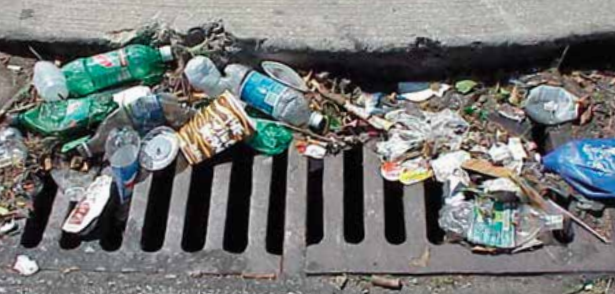
As rain or snow travels across rooftops, driveways, lawns, sidewalks, and streets, it picks up contaminants, making your property unsafe and unpleasant. Here are some examples of these contaminants:
- Trash
- Oil and Grease
- Heavy Metals
- Road salts
- Pet waste
- Fertilizers and Pesticides
Eventually, this dirty water (oftentimes referred to as stormwater runoff), finds its way to local creeks and rivers. It can harm fish and wildlife populations and kill native vegetation. This impacts human quality of life because we rely on waterways for swimming, drinking, transportation, providing food sources, and more. The sewer system is one method used to manage stormwater runoff. Though it is a comprehensive and robust system in many ways, it is not perfect. You should understand its relationship with your property, as well as its major flaw.
The Major Flaw with Sewer Systems
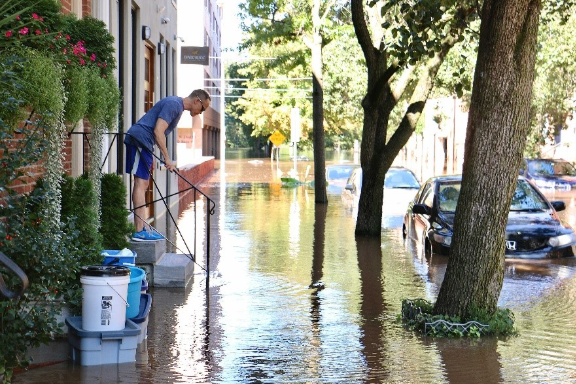
Many roofs have downspouts that direct water directly to the sewer system, but during/after an intense storm, this can overwhelm the pipes. Similarly, when ground surfaces (pavement or even highly compacted soils) fail to absorb water, storm drains fill too quickly with excess runoff. This leads to flash flooding in streets and property low points.
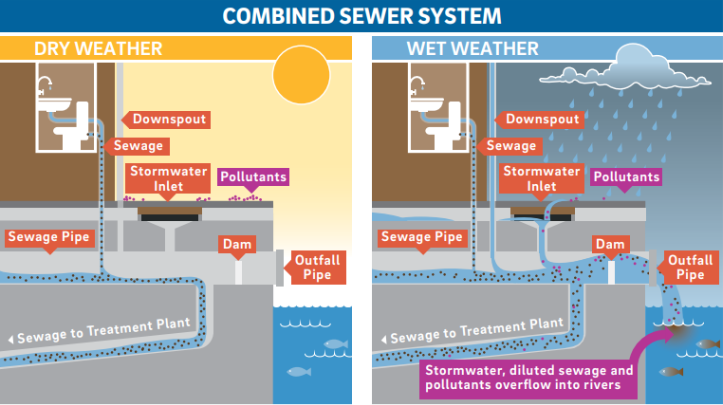
Sewer systems are typically designed to store and detain runoff to reduce peak flows for infrequent storm events (such as that major 24-hour storm that should happen every 10 years, but due to climate change, now happens more frequently). Because of that primary concern, controls that reduce flows for smaller, more frequently occurring events are usually not in place. This is why you may see flooding even after an “average” or “normal” rain/snowfall event.
Finding a Low Impact Development Solution
Whether you are developing or re-developing your property, do not wait for problems to arise before acting. There are many other methods and systems that better mimic natural processes, resulting in a more sustainable approach to the infiltration1, evapotranspiration2, and use of stormwater.
Low Impact Development (LID) is an approach that works with nature to manage stormwater as close to its source as possible. The primary intention behind utilizing LID systems and practices, versus relying solely on the sewer system, are as follows:
- preserve and recreate natural landscape features
- minimize effective imperviousness3 to create functional and appealing site drainage
- treat stormwater as a resource rather than a waste product
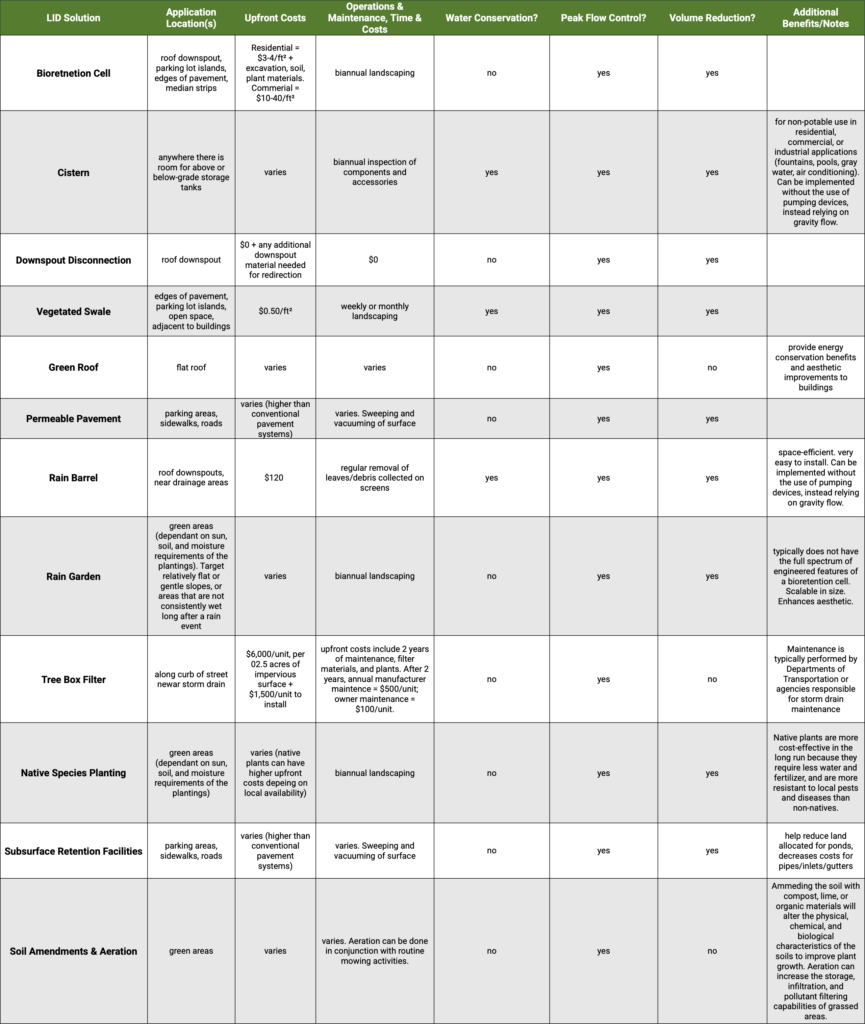
Answering the 5 questions below will inform you how you evaluate each LID option, all of which are summarized in a simple table at the end of the article.
Question 1: Does my property have unique features or problem areas?
Performing a basic site assessment is key to capturing any unique features or problem areas on your property. You can do it yourself for free using the procedure below. If you cannot observe drainage patterns after heavy rainfall, that is ok! You can perform a site assessment at any time. You can always use a water hose or bucket to observe certain areas at the time of your assessment.
- Obtain a map or property survey (even if you need to do a rough sketch that’s kind of to scale, something is better than nothing)
- Locate impervious surfaces and use arrows to show the water flow paths to the sewer drains
- Locate existing vegetated/green areas
- Identify and label underground utilities, septic systems, communication cables, or other conflicts
- Identify and mark slopes greater than 5%, using arrows to show the water flow paths to the sewer drains
- Take photos of your property and any areas of concern. Keep an eye out and capture things like:
- erosion channels
- sediment buildup
- plants that are invasive/overgrown or diseased/dying
- standing water
- trash & other debris
- missing/patchy mulch
- steep slopes
- downspout & drain conditions
- Optional step: Use a Perc Test to determine soil percolation4 rates (you can DIY or hire someone)
If your property has a unique use-type or location, it may be worth checking out the links here (if applicable):
Question 2: Do I want to conserve or capture water on my property for another use?
If yes, then a cistern or rain barrel are LID options to heavily consider.
Rain barrels are placed outside of a building at roof downspouts to collect and store rooftop runoff for later reuse in lawn and garden watering. They can be used to change runoff timing and to reduce runoff volume. Rain barrels have many advantages in urban settings. They take up little space, are inexpensive, and are quite easy to install.
Cisterns are larger storage facilities for non-potable use in residential, commercial, or industrial applications. They store water in manufactured tanks or underground storage areas. They can be used with any roof structure to intercept runoff and reduce runoff volume. In addition, the water can be treated and used for another purpose in or around your property.
Question 3: What is my budget?
Cost notes are listed in the summary table. But, please, before deciding on a final budget for upfront costs, it is important to note that the improvements you pay for today can reduce your costs tomorrow. Dealing with standing water inside a building is an expensive headache any reasonable owner/tenant/property manager/developer would like to avoid.
You should also consider that making these improvements can lead to a reduction or even an elimination of your storm water utility fees. Stormwater utility fees or taxes are typically calculated on the impervious area of your property. Because LID solutions lower the volume of runoff leaving the property, some jurisdictions offer credits to owners who make improvements that reduce the stormwater runoff volume entering the sewer system. If you are building an LID solution(s) to meet a local stormwater requirement, check with your local government before you start. Your local government’s public works or environmental department might have specific procedures you need to follow and could offer guidance on design. You could also find out if there are programs that offer financial assistance to help you build your project.
Question 4: How much time and money do I want to spend on operations and maintenance?
Cost notes for operations and maintenance are listed in the summary table. If you will not be the sole operator/maintainer of the system, then seek input from others. It is recommended that you designate a Stormwater Champion that will be responsible for this work. Along with your budget ideas, the Champion can help point out the best solution(s). A fancy expensive system means nothing if there is no one willing to operate or maintain it.
Question 5: Should I consult with a stormwater management expert?
Typically, the answer is yes. Especially if you are purchasing equipment and materials that have a warranty. An improper installation, or application with a different product, may void the warranties. Never dig in the ground when you are unsure what’s underneath; you could create a costly and unnecessary headache.
At this point, you should feel encouraged and empowered to do your own research, but nothing can replace the level of quality and assurance that comes with having a paid expert involved in the project.
Summary Table